
Health and Safety Policy — Skip Hire Sidcup
Policy Statement: This document sets out the health and safety policy for our skip hire operations. It applies to all skip hire services Sidcup activities and to anyone working on behalf of the skip hire company Sidcup, including employed staff, contractors and subcontractors. The aim is to prevent injury and ill health, protect the public, and limit property and environmental damage through robust risk management, clear responsibilities and ongoing review. Our commitment is to continuous improvement in safety performance across rubbish removal Sidcup and related waste handling services.Scope and Objectives
This policy covers the provision, delivery, placement, collection and transportation of skips, and site works where bins and containers are used. It includes management of general waste, recyclable materials and guidance on segregation to reduce hazardous waste incidents. The objectives are to: minimise risks, maintain compliance with applicable legislation, provide appropriate training, and ensure effective emergency preparedness for all operations carried out by our sidcup skip hire and rubbish removal teams.
Responsibilities and Leadership
Senior management hold ultimate responsibility for health and safety and will ensure resources are available to implement this policy. Line managers and supervisors must carry out the day-to-day supervision, ensure risk assessments are completed, and confirm safe systems of work are enforced. Employees and operatives are required to follow instructions, use provided PPE correctly and report hazards immediately. Our skip hire services Sidcup emphasises shared accountability: every person has a duty to contribute to a safe working environment and to stop unsafe work where necessary.Risk assessment is central to our approach. All routine and non-routine tasks are assessed for hazards such as manual handling injuries, vehicle movements, slip/trip fall risks, collapsing loads and exposure to hazardous materials. Control measures follow the hierarchy of control: elimination, substitution, engineering controls, administrative actions and personal protective equipment. For example, where possible we minimise manual lifting by mechanical aids and enforce exclusion zones during vehicle loading and unloading to protect operatives and members of the public who are near skip hire company Sidcup activities.
 Training and competence are essential. We provide induction training for new employees, refresher courses, and task-specific instruction for drivers, banksman, operatives and waste handlers. Training covers safe lifting techniques, correct use of PPE, traffic management, safe loading practices and handling of potentially hazardous items such as asbestos, chemicals and sharps. Records of qualifications, licences and training are kept to ensure that all operatives who perform skip hire operations Sidcup are competent and able to follow required safety procedures.
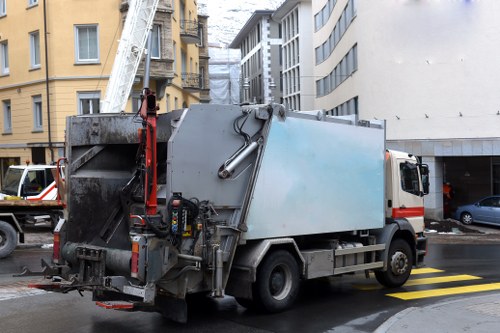
Controls for vehicle operations and site management include pre-shift vehicle checks, secure load procedures, clear signage when working on public highways and designated drop-off/pick-up routines to reduce disruption and risk. Mobile plant and vehicle reversing are minimised by using banksmen and modern camera systems where practical. Waste segregation rules are enforced to avoid mixing hazardous items with general rubbish; suspected hazardous waste is identified and isolated and only handled by authorised personnel with appropriate controls in place.
Emergency procedures and incident management are documented and communicated to all staff. In the event of a spill, fire, personal injury or discovery of hazardous materials, operatives must secure the area, alert their supervisor and follow the established incident response plan. All incidents, including near misses, are recorded, investigated and lessons learned are applied to prevent recurrence. Reporting and investigation are mandatory steps to maintain continual improvement and legal compliance for the skip hire and rubbish collection sector.
 Monitoring, audit and review ensure that the health and safety policy remains effective. Regular site inspections, toolbox talks and periodic safety audits are conducted. Performance indicators such as incident frequency, training completion rates and audit findings inform management reviews. Records of risk assessments, maintenance, training and incident investigations are maintained and retained in accordance with statutory requirements. Any changes in operations, equipment or legislation prompt a review of risk assessments and procedures to ensure ongoing protection for staff, contractors and the public.
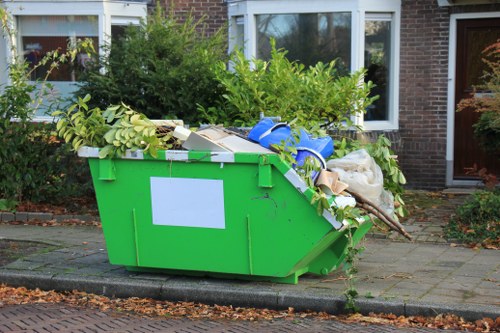 Control measures for specific hazards are summarised below:
- Personal Protective Equipment (PPE): helmets, gloves, hi-vis and safety footwear are mandatory on operational sites.
- Manual handling: mechanical aids and safe lifting training reduce the risk of musculoskeletal injury.
- Traffic management: exclusion zones, signage and competent banksmen control vehicle risks.
- Hazardous waste: identification, isolation and specialist removal procedures prevent contamination and exposure.